Vietnamese Currency Denominations Currently in Circulation
https://chanh.me/en/post/cac-menh-gia-tien-dang-duoc-luu-hanh-tai-viet-nam-hien-nayVietnamese currency, officially known as the Vietnamese dong (VND), is the legal currency of Vietnam. In everyday life, people commonly use banknotes ranging from a few thousand dong to 500,000 VND for shopping, paying for services, and many other transactions.
So, what currency denominations are currently used in Vietnam? Which banknotes are made of polymer, and which are made of cotton paper? This article provides an overview of Vietnamese banknote denominations for easy reference.
What Is the Currency of Vietnam?
Vietnam's currency is the dong, commonly represented by its international currency code, VND.
Banknotes and coins issued by the State Bank of Vietnam are legal tender within the country.
In practice, the cash most commonly used today falls into two main categories:
- Polymer banknotes.
- Cotton-paper banknotes.
Alongside cash, cashless payment methods such as bank transfers, payment cards, and QR code payments are becoming increasingly popular.
Vietnamese Currency Denominations
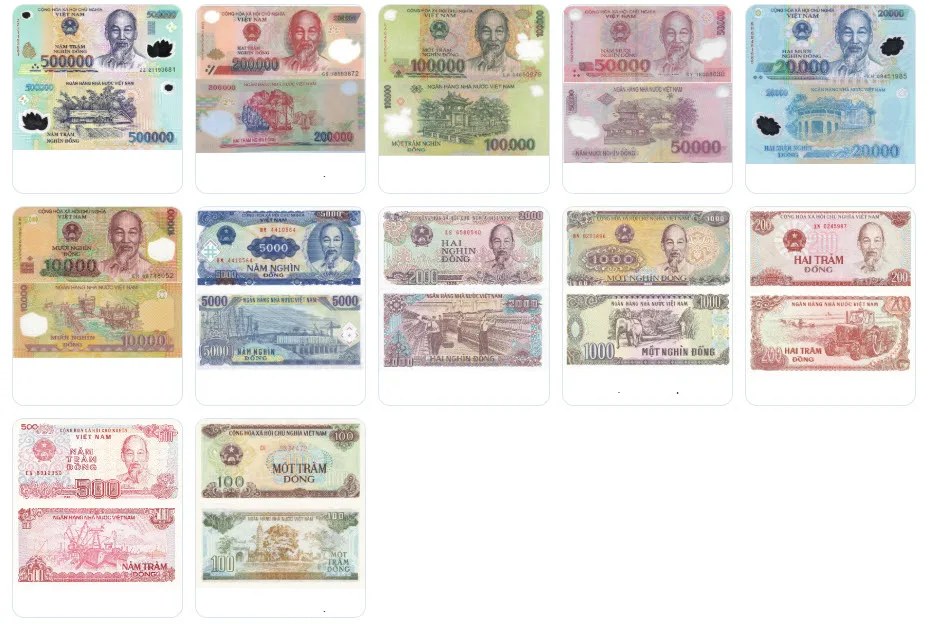
Common Vietnamese banknote denominations can be listed from highest to lowest as follows:
| Denomination | Value | Common Material |
|---|---|---|
| 500,000 dong | 500,000 VND | Polymer |
| 200,000 dong | 200,000 VND | Polymer |
| 100,000 dong | 100,000 VND | Polymer |
| 50,000 dong | 50,000 VND | Polymer |
| 20,000 dong | 20,000 VND | Polymer |
| 10,000 dong | 10,000 VND | Polymer |
| 5,000 dong | 5,000 VND | Cotton paper |
| 2,000 dong | 2,000 VND | Cotton paper |
| 1,000 dong | 1,000 VND | Cotton paper |
| 500 dong | 500 VND | Cotton paper |
| 200 dong | 200 VND | Cotton paper |
| 100 dong | 100 VND | Cotton paper |
Among these, the 10,000 to 500,000 VND polymer banknotes are familiar denominations widely used in cash transactions today.
1. The 500,000 VND Banknote
The 500,000 VND banknote is a high-value denomination in Vietnam's current currency system.
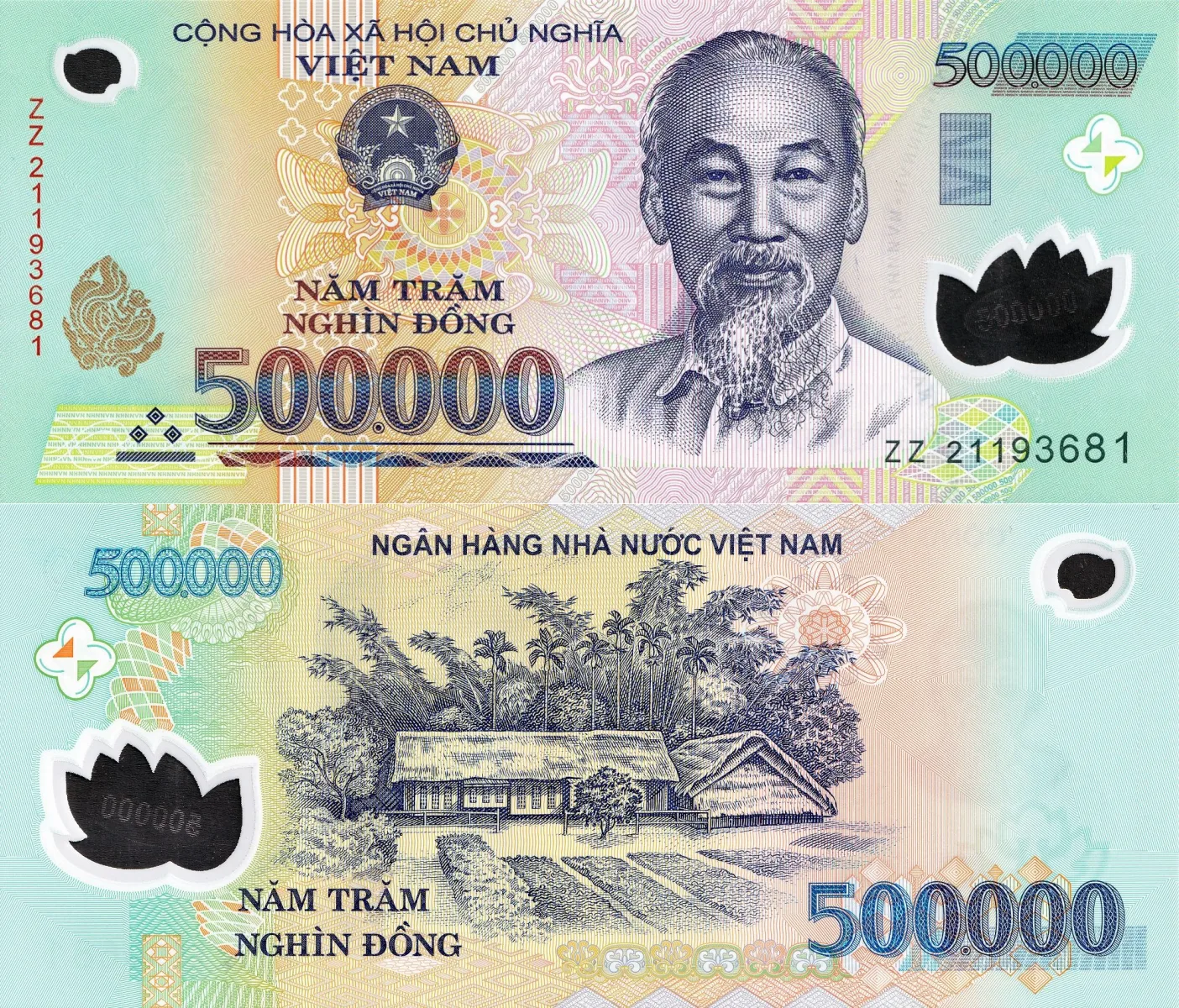
Made of polymer, it is convenient for relatively large transactions and reduces the amount of cash people need to carry compared with using multiple lower-denomination notes.
When receiving or paying with high-denomination banknotes, users should check their security features and carefully count the money.
2. The 200,000 VND Banknote
The 200,000 VND banknote belongs to the polymer series and is one of the higher-value denominations used in Vietnam.
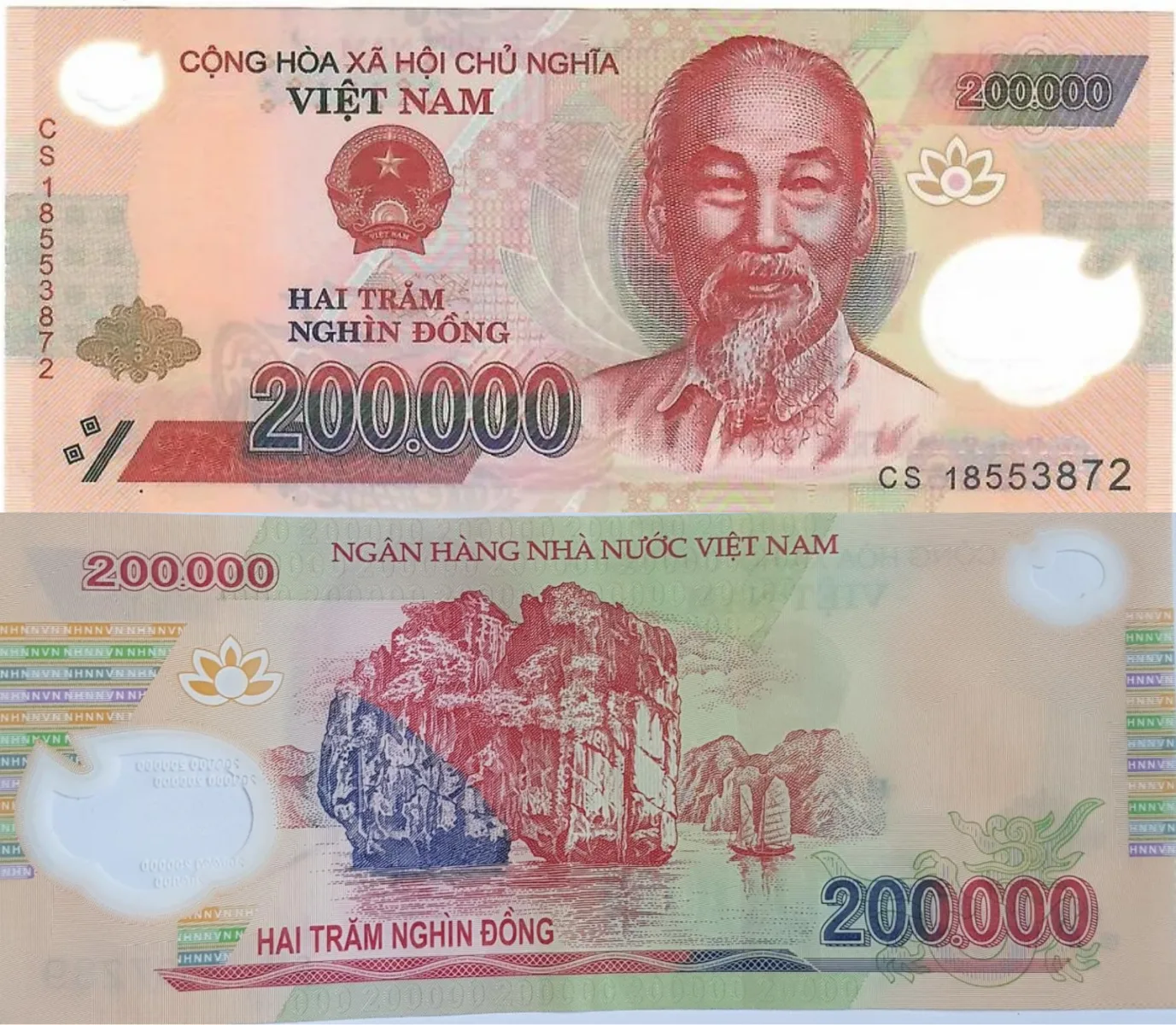
Its value falls between the 100,000 VND and 500,000 VND notes, making it more convenient to pay and receive change in many transactions.
3. The 100,000 VND Banknote
The 100,000 VND banknote is a very familiar denomination in daily life.
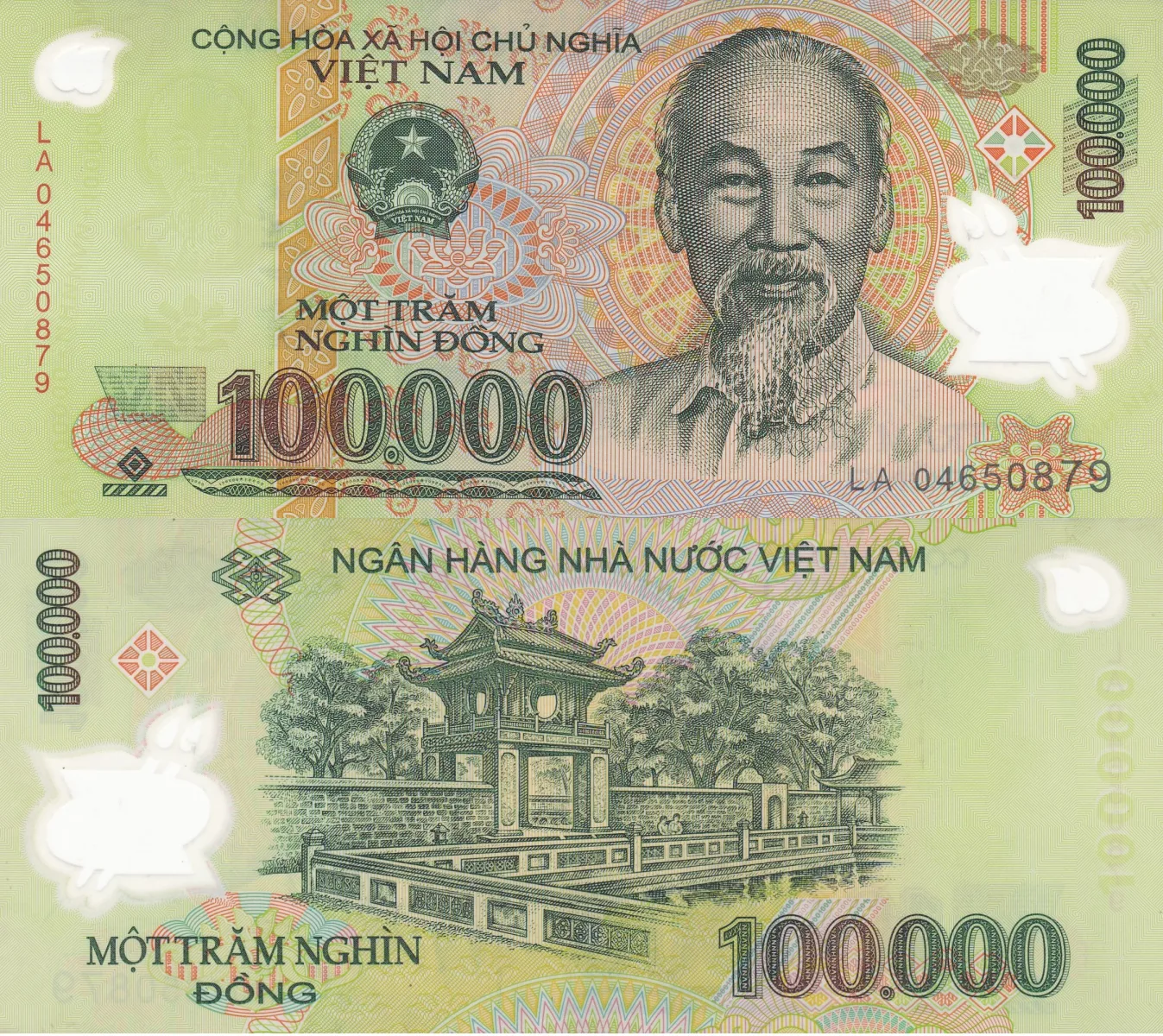
It is used for many everyday activities, including shopping, dining, transportation, and paying for common services.
4. The 50,000 VND Banknote
The 50,000 VND banknote is made of polymer and is often used for small and medium-sized transactions.
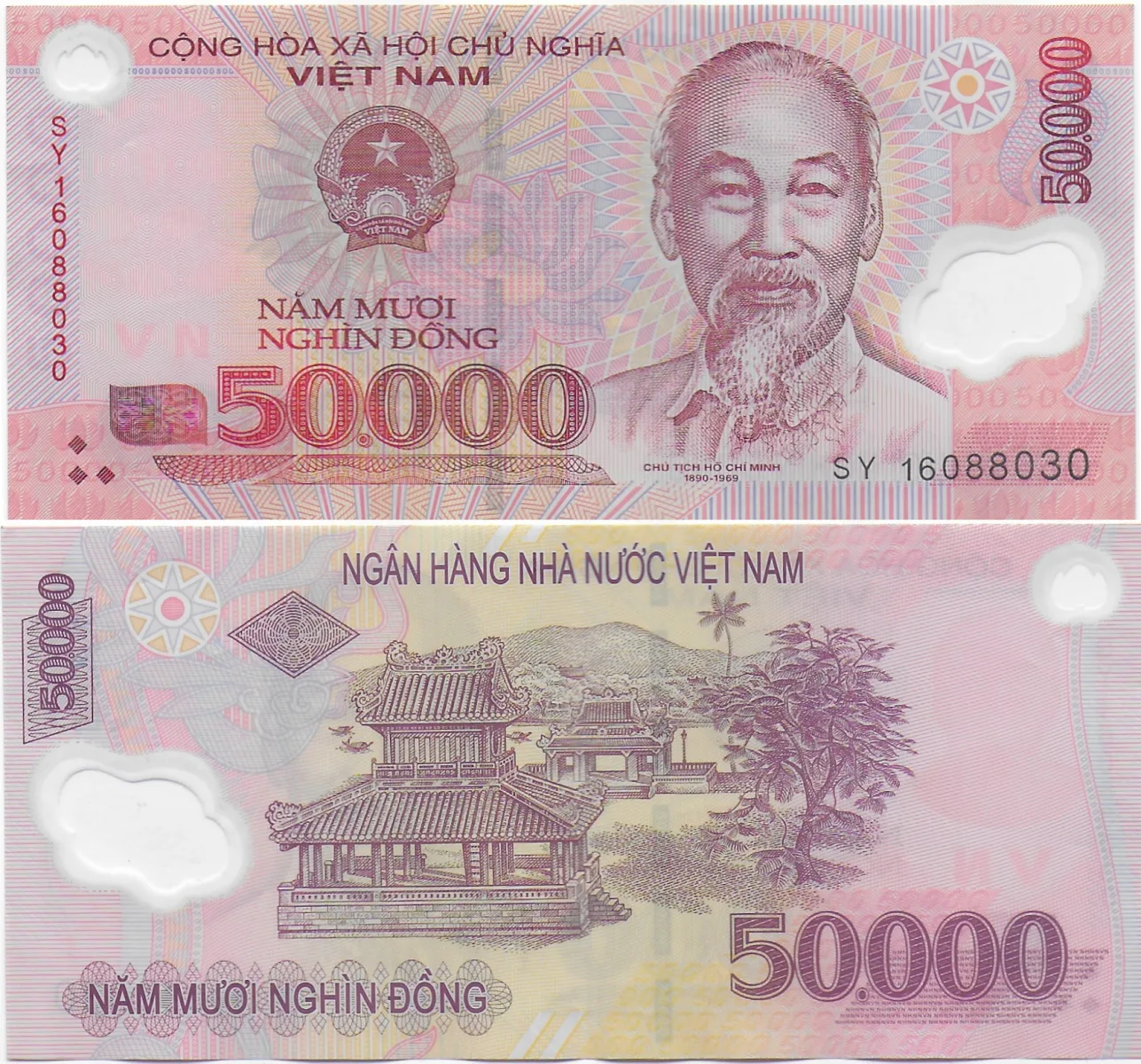
It is also convenient to combine with other denominations when paying an exact amount.
5. The 20,000 VND Banknote
The 20,000 VND banknote is one of the commonly used polymer denominations.
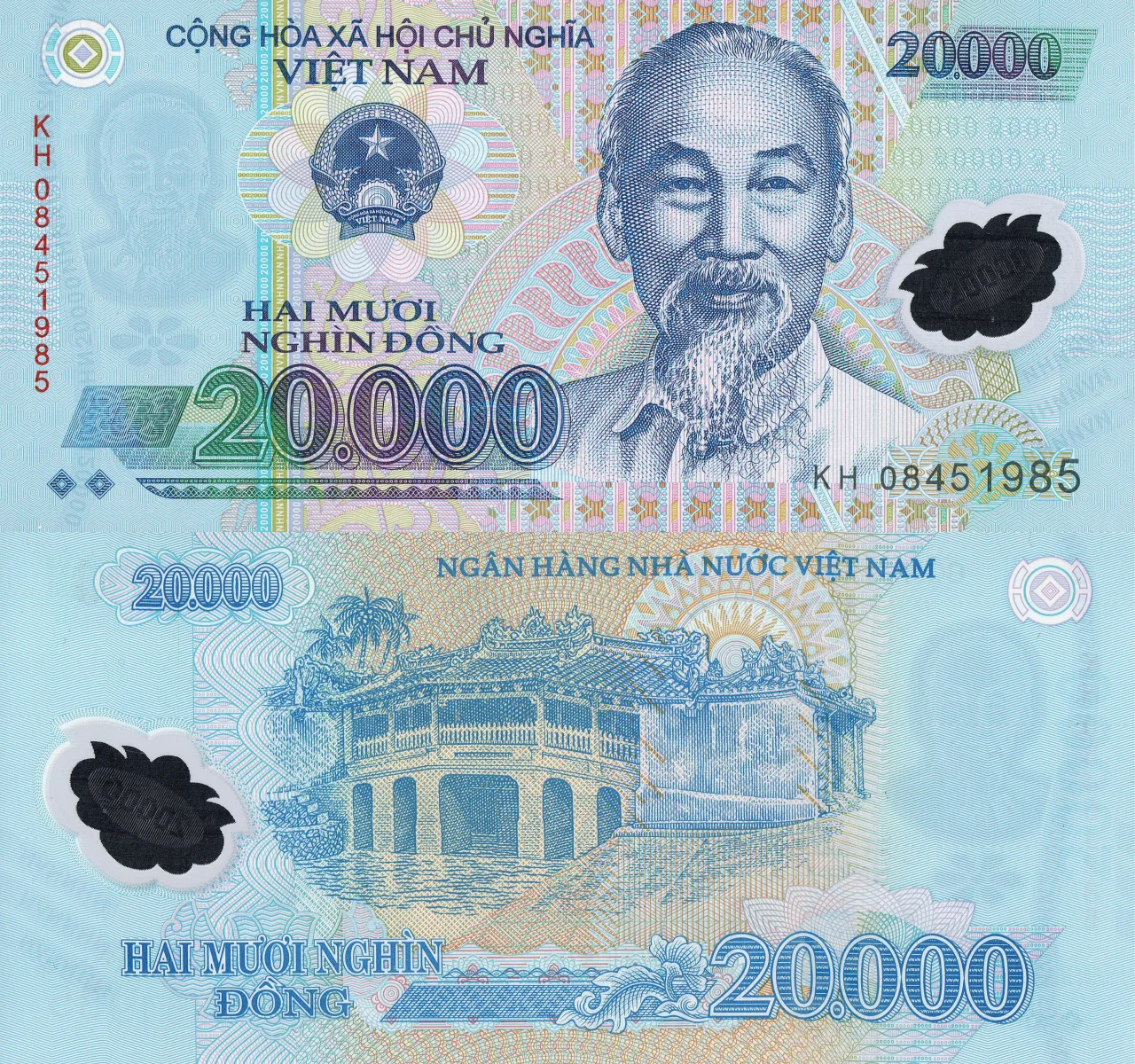
It is frequently used to pay for food, drinks, parking, and other small everyday expenses.
6. The 10,000 VND Banknote
The 10,000 VND banknote is the lowest denomination among the polymer notes commonly used in Vietnam.
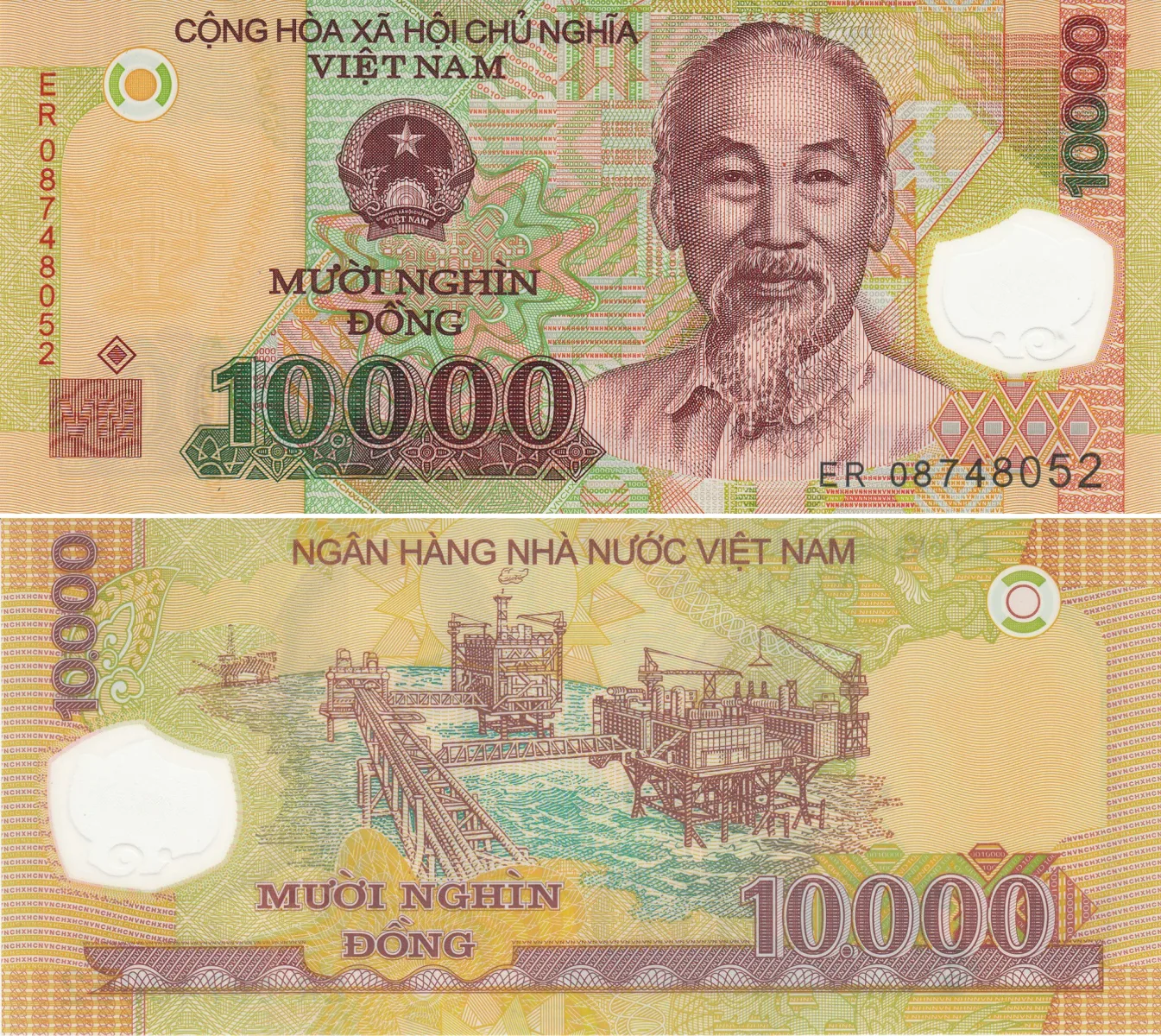
This denomination is especially useful for small cash transactions.
7. The 5,000 VND Banknote
Unlike the polymer denominations listed above, the 5,000 VND banknote is made of cotton paper.
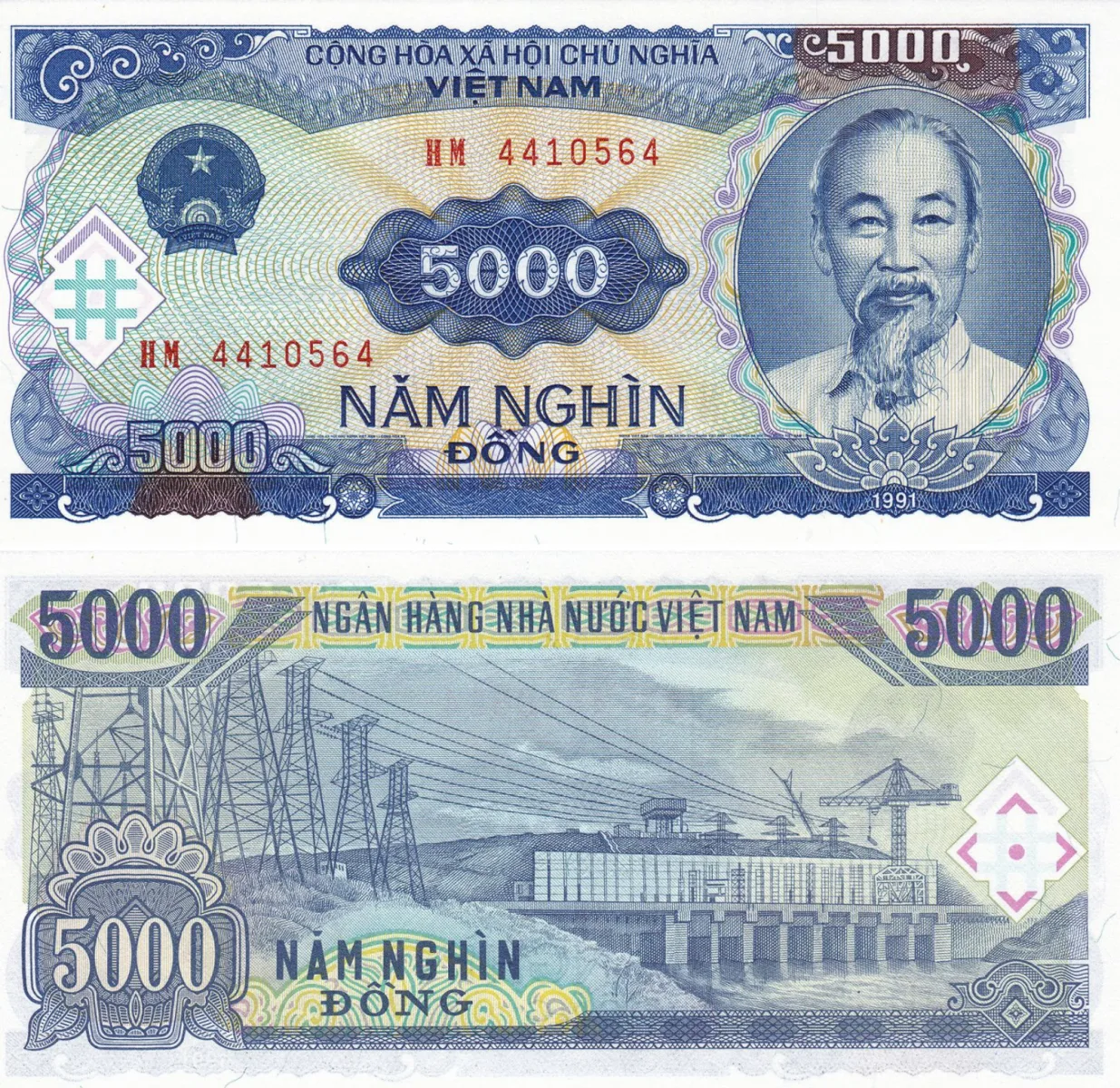
Although its value is relatively small, the 5,000 VND note remains useful for making payments and giving change.
8. The 2,000 VND Banknote
The 2,000 VND banknote is also made of cotton paper.
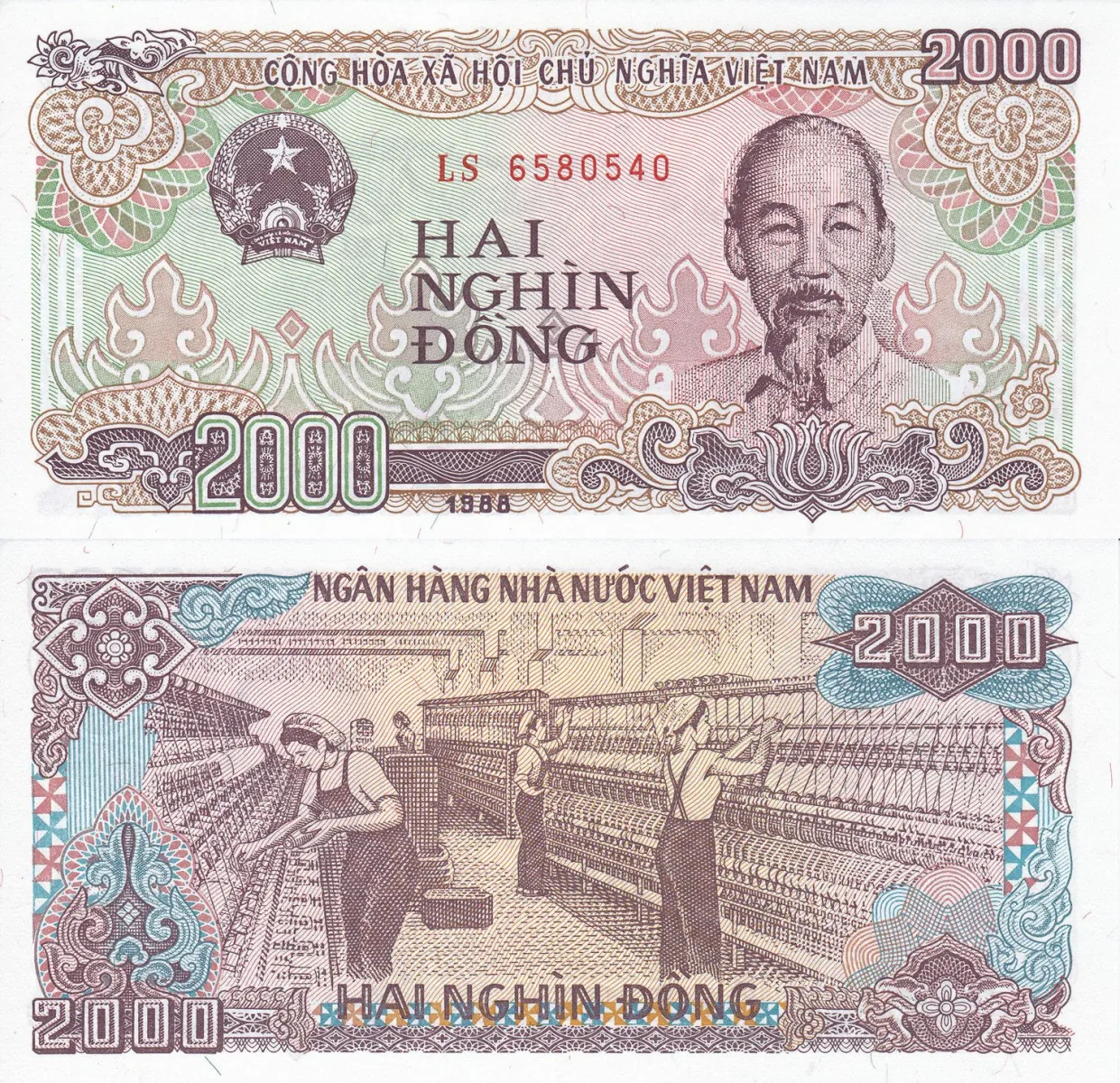
As a low denomination, it is often combined with other notes to make up the amount needed for a payment.
9. The 1,000 VND Banknote
The 1,000 VND banknote is one of the familiar lower-denomination notes in Vietnam.
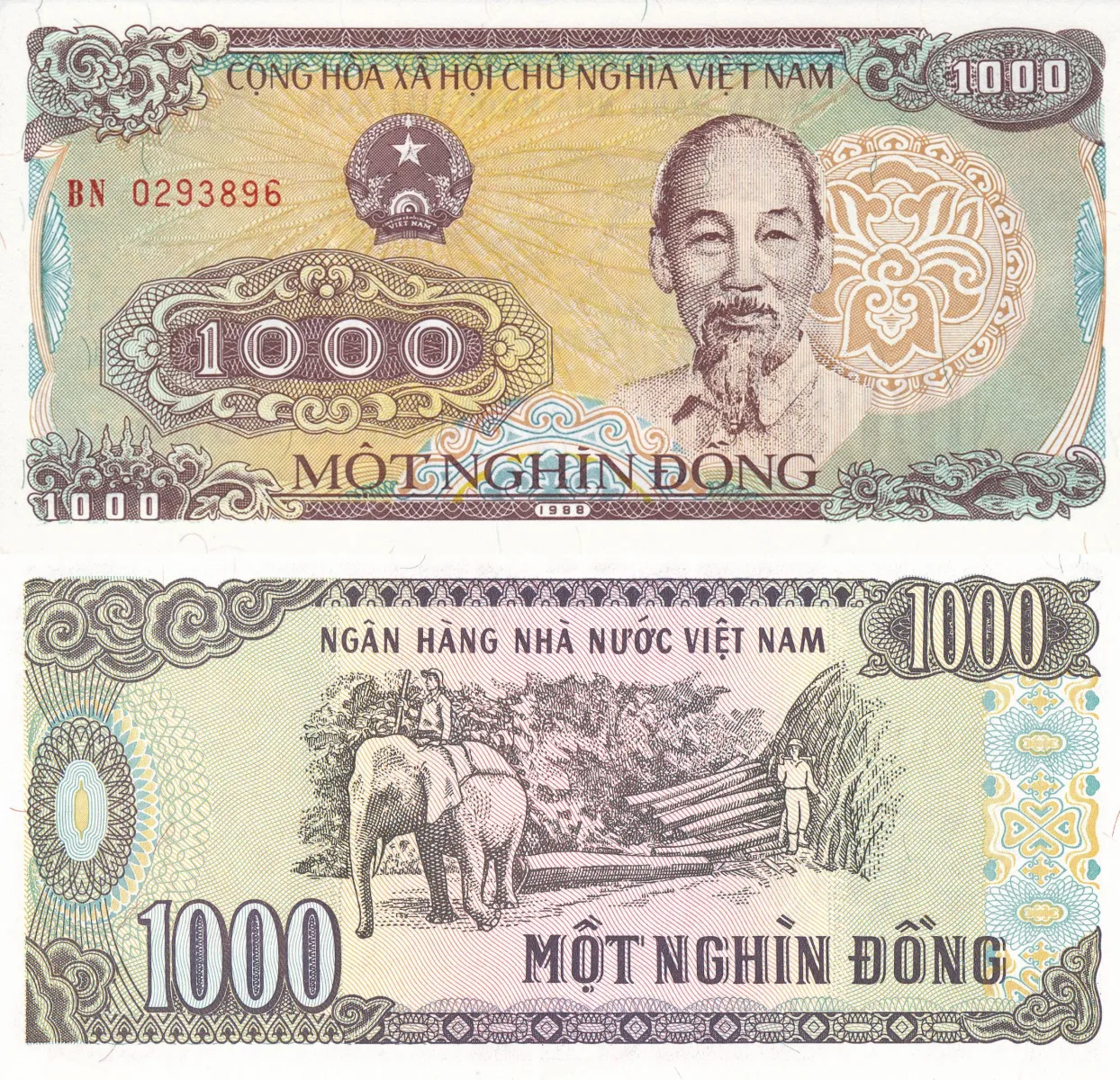
Today, as the prices of goods and services have changed over time, the 1,000 VND note may be used less frequently in some transactions than it once was. Nevertheless, it remains familiar to many Vietnamese people.
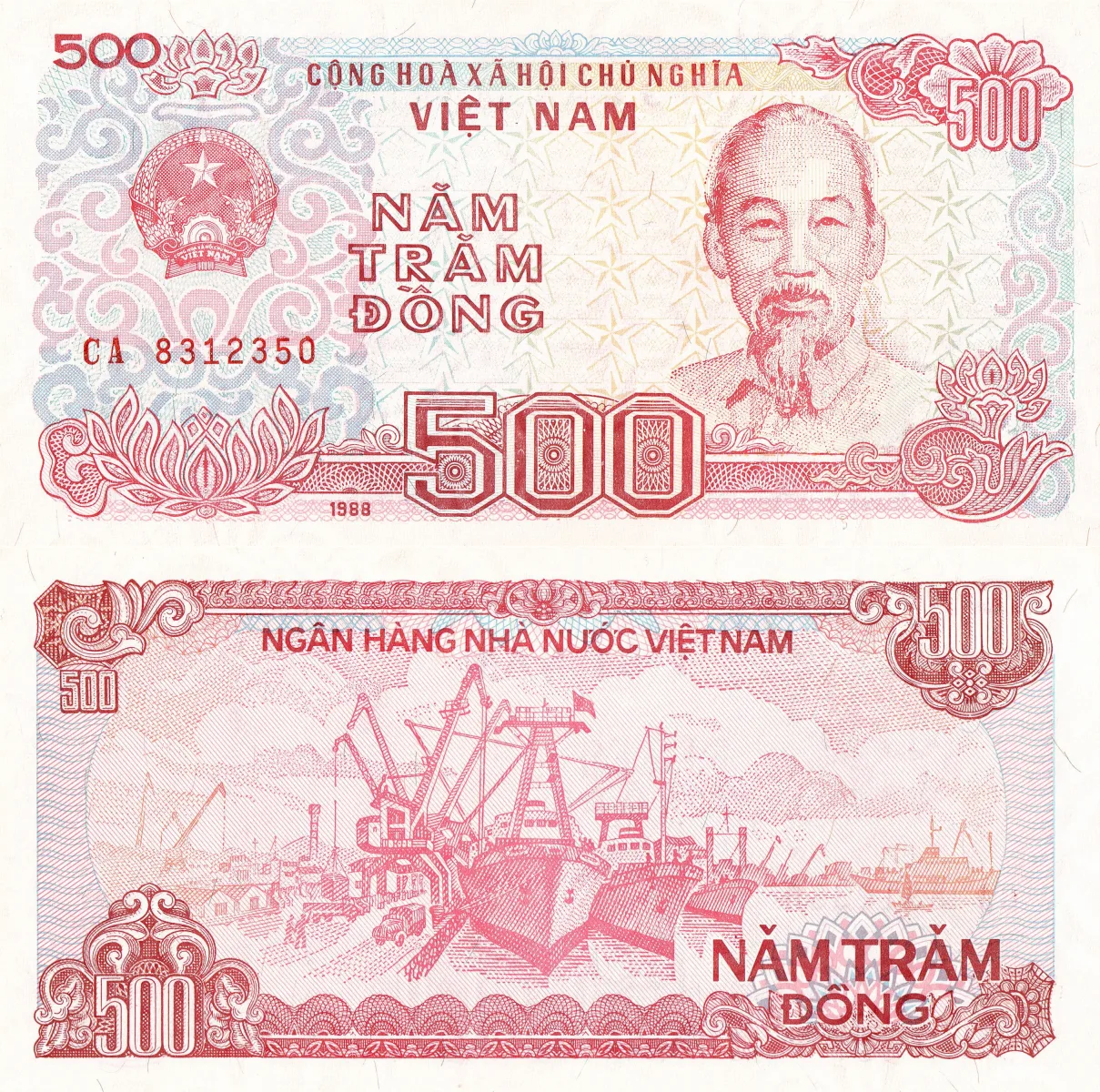
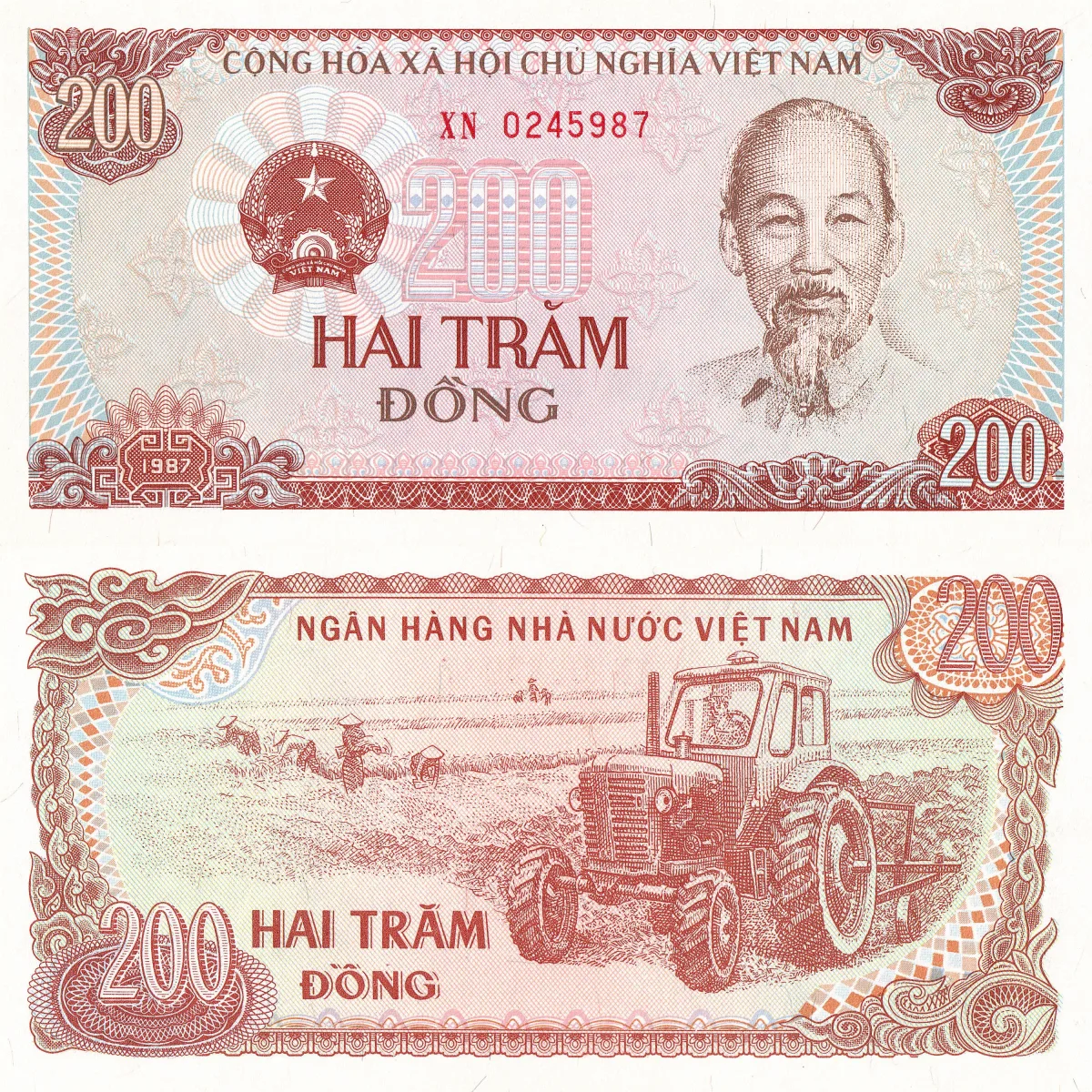
10. The 500, 200, and 100 VND Banknotes
In addition to banknotes worth 1,000 VND or more, Vietnam also has smaller-denomination paper notes, including:
500 VND
200 VND
100 VND
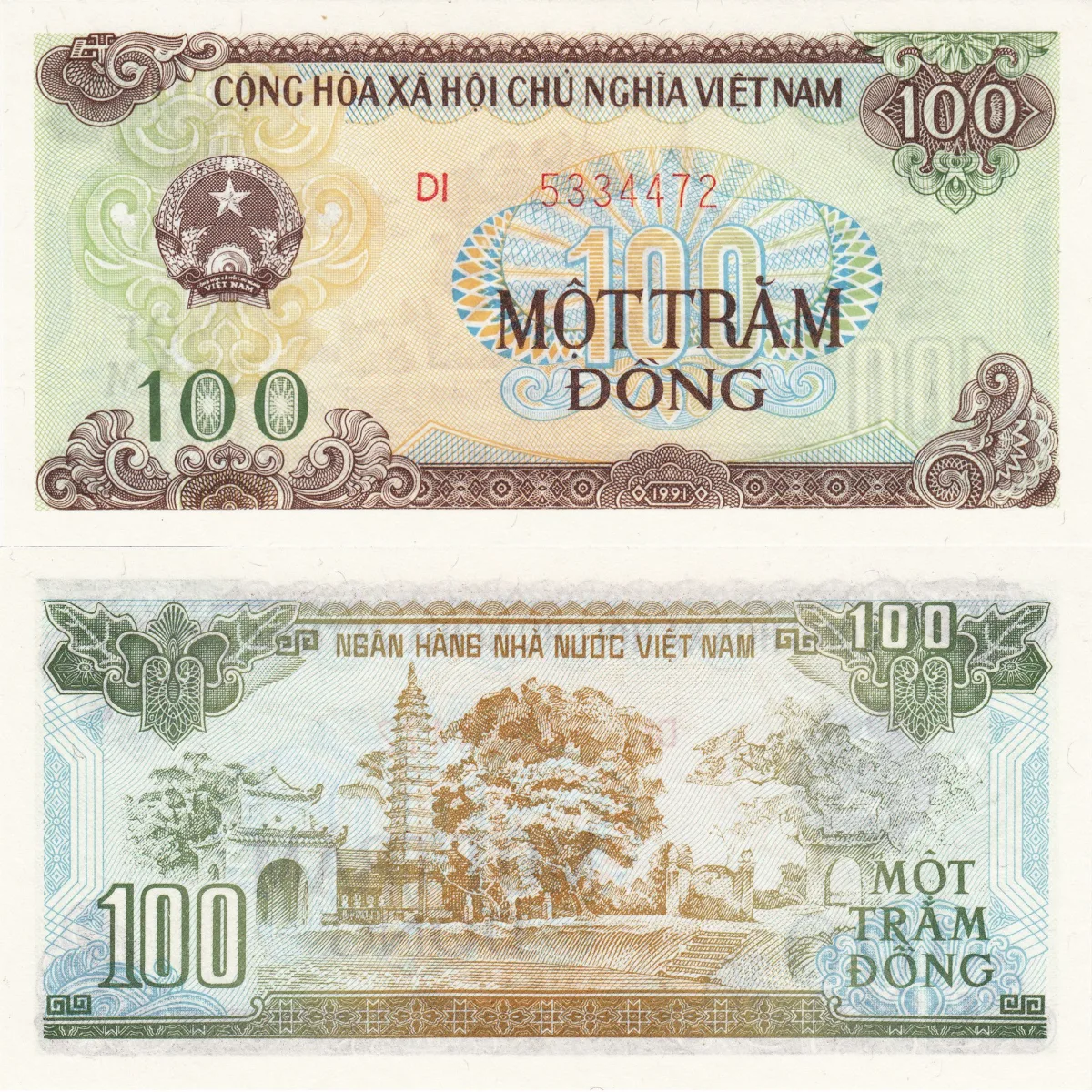
In everyday life today, these very small denominations are encountered far less frequently than higher-value notes.
When discussing small denominations, it is important to distinguish between money that has been issued in the past, money that remains valid for payment, and money that is still commonly seen in circulation.
Which Vietnamese Banknotes Are Made of Polymer?
There are six familiar polymer banknote denominations:
10,000 VND – 20,000 VND – 50,000 VND – 100,000 VND – 200,000 VND – 500,000 VND.
Polymer is more durable than ordinary paper and allows various security features to be incorporated to help people identify genuine banknotes.
Which Vietnamese Banknotes Are Made of Cotton Paper?
Familiar cotton-paper banknote denominations include:
100 VND – 200 VND – 500 VND – 1,000 VND – 2,000 VND – 5,000 VND.
Among these, the 1,000 VND, 2,000 VND, and 5,000 VND banknotes are more commonly encountered in everyday life than very small denominations such as 100 VND or 200 VND.
What Is the Highest Vietnamese Currency Denomination?
The highest-denomination banknote in Vietnam's current currency system is 500,000 VND.
It can be written as:
500,000 VND = five hundred thousand Vietnamese dong.
This polymer banknote is often used for higher-value cash transactions.
What Is the Lowest Vietnamese Currency Denomination?
Among the small-denomination banknotes that have been issued and are still mentioned as part of Vietnam's currency system is the 100 VND note.
However, it is important to remember that very small denominations are not encountered in everyday transactions as often as commonly used notes worth 1,000 VND or more.
How to Identify Genuine Vietnamese Banknotes
When receiving cash, especially high-denomination notes, users should examine the banknotes and check their security features.
A combination of methods can be used, including visual inspection, checking special details on the banknote, and comparing them with the State Bank of Vietnam's official guidance on identifying genuine currency.
Do not rely on just one feature to decide whether a banknote is genuine or counterfeit.
Can Damaged or Torn Vietnamese Banknotes Be Exchanged?
During use, banknotes may become torn, burned, deformed, or otherwise damaged for various reasons.
Whether a damaged banknote qualifies for exchange depends on its condition and the applicable regulations. Anyone holding damaged currency should contact a bank or consult the State Bank of Vietnam's guidance for proper assessment and handling.
Should You Carry a Lot of Cash When Traveling in Vietnam?
For travelers, cash remains useful when shopping at markets, small shops, tourist attractions, or places where electronic payments are less convenient.
However, bank transfers and QR code payments are becoming increasingly popular in cities and tourist areas.
Travelers may find it helpful to carry a range of denominations, such as 10,000 VND, 20,000 VND, 50,000 VND, 100,000 VND, and 200,000 VND, for smaller payments.
Vietnamese banknote denominations vary widely, from low-value notes to the 500,000 VND banknote. Today, polymer notes from 10,000 VND to 500,000 VND, together with the 1,000 VND, 2,000 VND, and 5,000 VND paper notes, are familiar denominations in daily life.
Knowing the different currency denominations is useful not only for Vietnamese people but also especially for international visitors traveling to Vietnam for the first time.
When using cash, always check the banknotes you receive, carry a variety of denominations for convenience, and use electronic payment methods when appropriate.
Image source: masu.com.vn